Electron Microscope: A Bold Science Design for Craft Fairs
As I prep my booth for the upcoming weekend craft fair, I am constantly evaluating which machine embroidery design files will stop customers in their tracks. My table is usually a chaotic mix of embroidered tote bags, aprons, tea towels, patches, caps, and small pouches. Today, I am taking a close look at the Electron Microscope design to see if it earns a prime spot on my display rack. This isn't just about picking a pretty picture; it is about judging what sells, what looks good in person, and what is practical to produce in batches for a busy market day.
First Impressions and Visual Appeal
The first thing that strikes me about the Electron Microscope is its distinct vibe. Based on the title and the promise of making you "look like a scientist," this design feels modern, educational, and slightly quirky. It does not scream "farmhouse rustic" or "elegant wedding." Instead, it hits a sweet spot for the School category, appealing to teachers, science enthusiasts, students, and anyone who loves a clever STEM-themed aesthetic. In a sea of floral patterns and generic inspirational quotes, a detailed scientific instrument stands out as bold and intellectual. It suggests a premium, niche appeal that can attract buyers looking for something unique rather than mass-produced.
Product Suitability and Booth Display Strategy
When deciding where to place this embroidery file in my product lineup, I have to consider visibility and surface area. The description suggests stitching it onto t-shirts, jackets, backpacks, and bags, which gives me plenty of options for my craft fair product range.
- Tote Bags and Market Bags: This is likely the strongest contender. A large canvas tote provides ample space for the intricate details of an electron microscope. Placing this as a central focal point on a natural or black canvas bag creates a high-contrast handmade product that screams "academic chic."
- Aprons and Tea Towels: For the kitchen section of my booth, an apron embroidery featuring this design could be a hit for science-loving home cooks. However, tea towel embroidery requires caution; if the design has fine lines, the looped texture of a waffle weave towel might eat up the details. I would reserve this for flat-weave linen towels only.
- Caps and Patches: An embroidered patch is a fantastic low-risk item. If the design scales down well, it becomes a collectible item for students. On caps, the curved surface can be tricky. If the microscope design is wide, it might distort on a structured cap, so I would test this carefully before committing to a full batch.
- Pillow Covers and Pouches: These make excellent impulse buys. A small zippered pouch with this motif works well as a pencil case or a gadget holder, reinforcing the School and study theme.
Production Practicality and Stitch Quality
From a production standpoint, the viability of the Electron Microscope depends heavily on its execution. Scientific illustrations often rely on fine lines and shading to convey depth and mechanical complexity. As an experienced designer, I know that stitch density is critical here. If the design is too dense, it will become stiff and pucker the fabric, especially on lighter materials like t-shirts. If it is too sparse, the "scientific" look will be lost, and it will just look like a blob from three feet away.
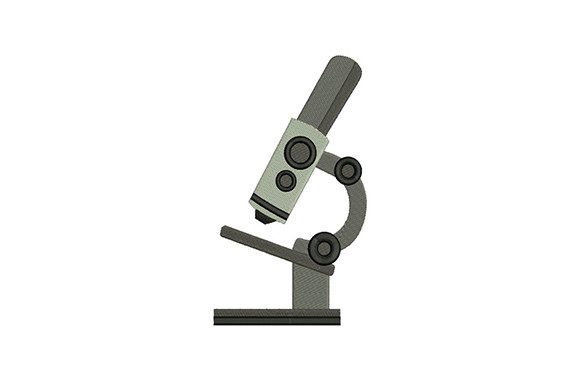
I need to evaluate how easy the design is to understand at a glance. At a busy craft fair, customers scan tables quickly. Does the silhouette immediately read as a microscope? If yes, it works as a strong visual hook. If it requires explanation, it might slow down sales. Furthermore, I must consider if this works as a small accent or if it demands to be a large focal design. Given the subject matter, it likely needs to be medium-to-large to preserve the integrity of the lens and stand components.
Technical Considerations for the Maker
Before running this on my final inventory, there are several technical hurdles to clear. The description mentions it is a machine embroidery design, but specific details on hoop size and stitch count are not provided in the brief. This is a crucial gap. I cannot assume the hoop size fits my standard 5x7 frame without checking the file properties first. If it requires a larger hoop, that limits the products I can make, ruling out smaller pouches or infant onesies.
Additionally, I must be wary of tiny details. Electron microscopes have complex internal structures. If the digital embroidery file includes lettering or extremely fine gauge lines, these may vanish when stitched onto textured fabrics or dark materials. Speaking of color, thread contrast is vital. A dark design on a black backpack will be invisible. I need to ensure I have high-contrast thread colors available, perhaps using metallic threads to mimic the chrome finish of real lab equipment, adding that extra layer of perceived value.
Marketing and Online Presence
Beyond the physical booth, this design has potential for my online store. As an Etsy seller, presentation is everything. The Electron Microscope photographs well if styled correctly. Imagine a flat lay with the embroidered item surrounded by vintage books, a magnifying glass, or laboratory glassware. Creating a printable mockup or using high-quality design assets to show the product in use can significantly boost click-through rates. For small shop product listings, emphasizing the "handmade quality" and the uniqueness of the science theme can justify a higher price point compared to generic screen-printed tees.
For those interested in commercial embroidery, verifying the license is non-negotiable. The prompt advises checking terms before selling finished products. If this is a personal-use-only file, I cannot legally sell the stitched items at my fair. Assuming the license permits commercial use of the finished product, this design adds a layer of brand consistency for shops specializing in educational or geek-chic goods.
Final Designer Notes and Recommendations
To ensure success with the Electron Microscope, I recommend the following workflow before heading to the fair:
- Test on Scrap Fabric: Always stitch a sample on the exact fabric type you intend to sell. Check for puckering and registration issues.
- Review Stabilizer: Complex designs often require a cut-away stabilizer rather than tear-away to support the weight of the stitches over time.
- Check Spacing: Ensure there is enough breathing room between elements so the design doesn't look cluttered when viewed from a distance.
- Compare Fabric Colors: Create samples on white, navy, and heather grey to see which background makes the design pop the most.
- Confirm Licensing: Double-check the download page or readme file to confirm you are allowed to sell items made with this embroidery file.
In conclusion, the Electron Microscope is a promising addition to a craft fair lineup, provided it is executed with attention to detail and fabric compatibility. It offers a fresh alternative to standard motifs and has the potential to become a signature item for sellers targeting the education and science markets. With the right preparation and product selection, this design can definitely help you look like a scientist—or at least sell like one.